
Silk Fabric Types from India for Export Buyers
A search for “silk fabric from India” is too broad to quote. Indian mills, handloom units, and exporters sell many constructions: chiffon, georgette, crepe, satin, organza, dupion, habotai, brocade, jacquard, noil, and silk blends. Each one behaves differently in a scarf, garment, saree, or home textile. This page is a specification guide. For silkworm varieties (Mulberry, Tasar, Eri, Muga), use the [Indian silk industry overview](/indian-silk-industry-overview/).
Start with end use, then name the cloth
Decide the product before the trade name. A women’s scarf, a lining, a saree, and a cushion cover will not share the same GSM, width, or finish. Once the end use is clear, you can ask for two or three constructions and compare samples. The buyer guide shows how to put those details in the first inquiry.
Common constructions and what they are for
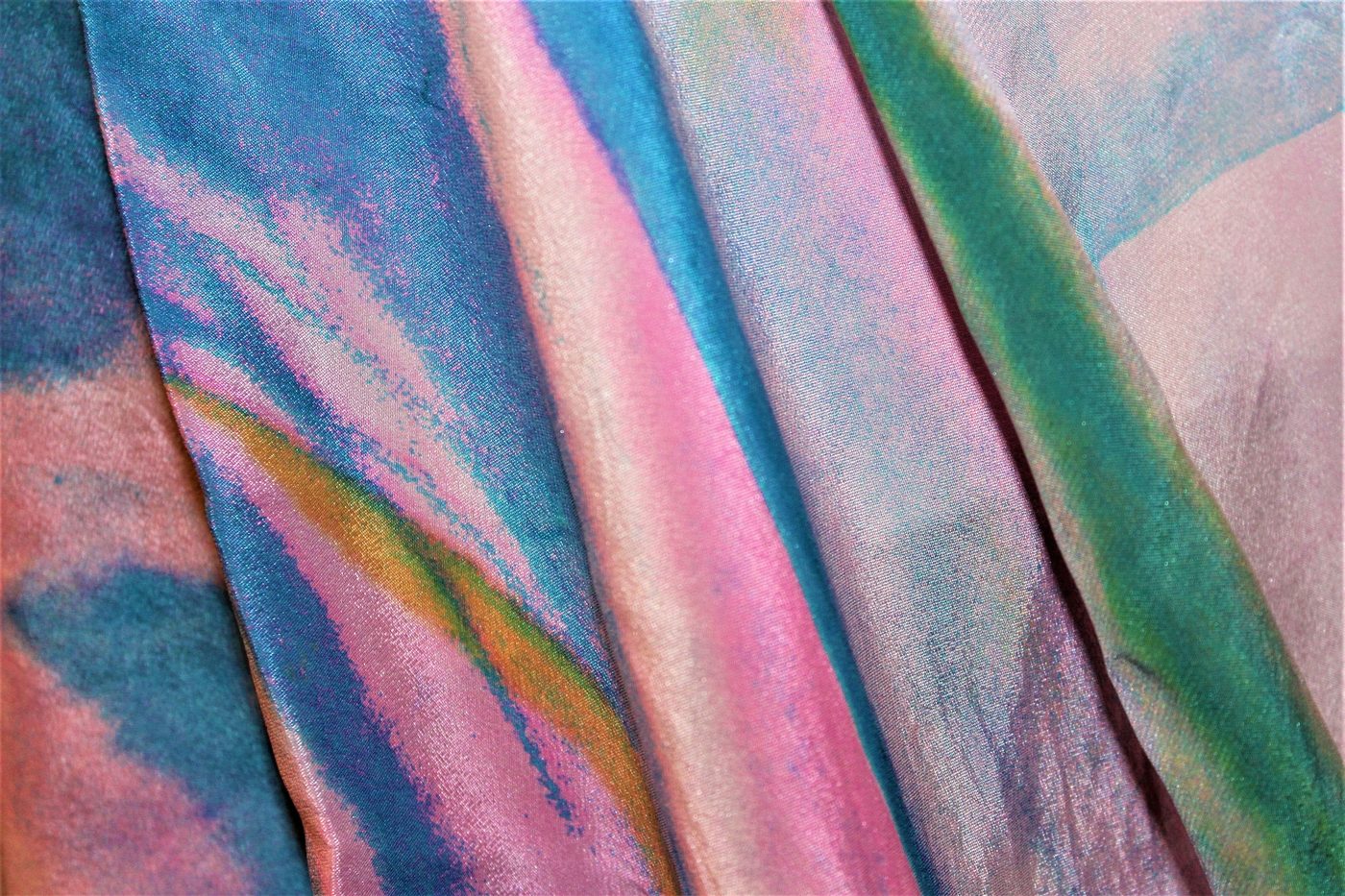
Trade names vary by supplier. Always pair the name with composition, width, GSM (or momme), and a sample.
| Construction | Typical export use | What to check |
|---|---|---|
| Chiffon | Scarves, overlays, light apparel | Transparency, GSM, snagging, roll width |
| Georgette | Dresses, sarees, scarves | Grain, drape, crease recovery |
| Crepe | Apparel, dress fabrics | Texture, weight, shrinkage |
| Satin / charmeuse | Linings, evening wear, accessories | Shine vs snagging, reverse side |
| Organza | Overlays, decorative, occasion wear | Stiffness, yarn quality, finishing |
| Dupion | Jackets, home, structured apparel | Slub variation, shade, batch match |
| Habotai | Linings, light apparel, craft | Evenness, width, finish |
| Brocade / jacquard | Sarees, occasion, furnishings | Pattern repeat, metal yarn, MOQ |
| Noil | Casual apparel, texture-led products | Short fiber feel, pilling, composition |
If a supplier uses a local name you do not recognise, ask for the construction in plain terms: plain weave or satin, filament or spun, printed or dyed, handloom or mill-made.
Pure silk and silk blends
Do not assume a silk-looking cloth is 100 percent silk. Blends with cotton, viscose, polyester, wool, or linen change price, care, and labeling. For when silk is the wrong fiber entirely, see silk vs cotton, wool and blends.
State composition in the inquiry, the quotation, the label plan, and any test report. “Silk mix” is not a specification.
Printed, dyed, and value-added silk
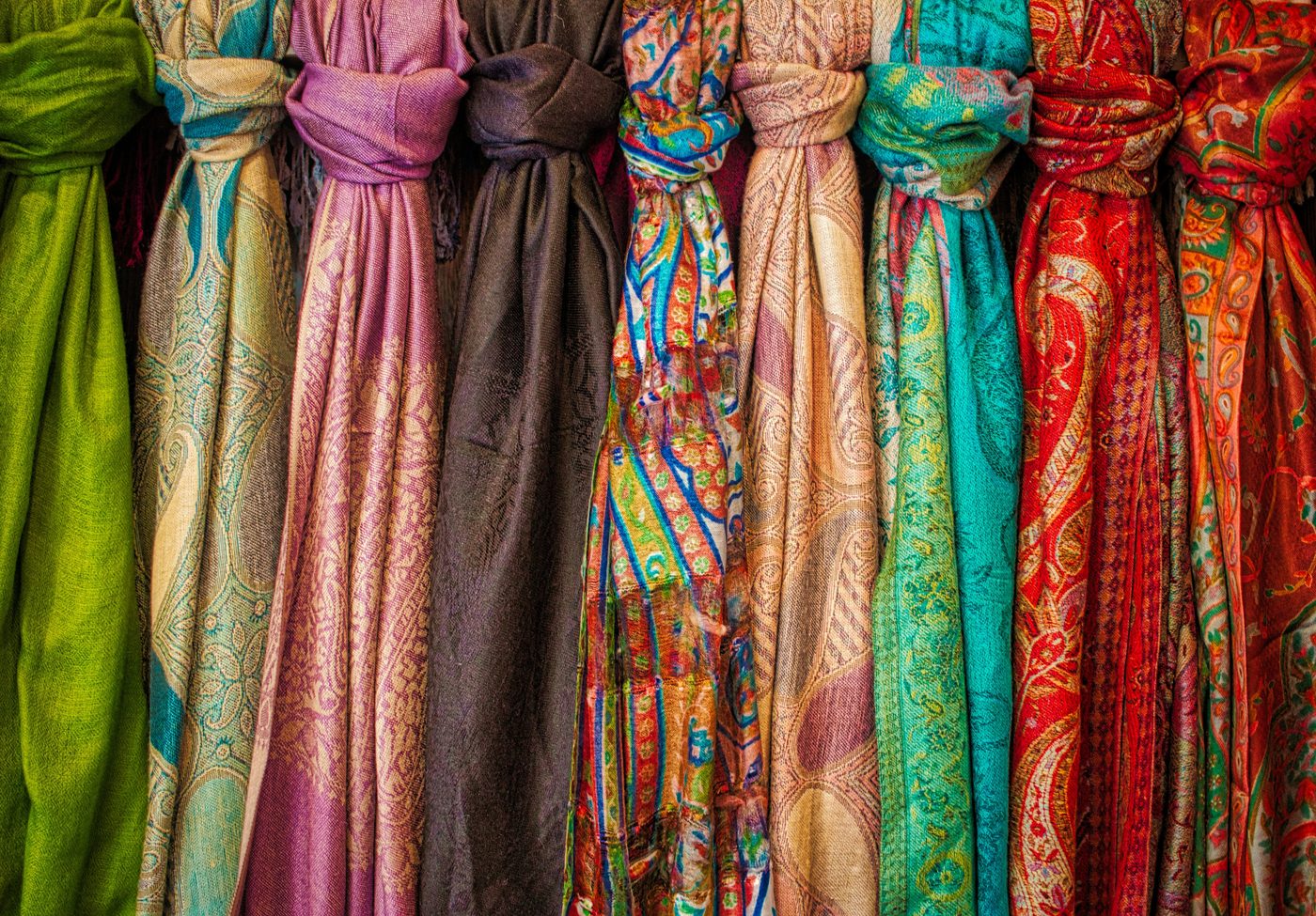
Printed silk is common for scarves and fashion. Ask about print method (digital, screen, or other), artwork format, repeat size, color matching, MOQ, and color fastness. Digital print often suits smaller runs and complex designs.
Dyed silk lives or dies on shade control. Send a Pantone or a physical swatch. Ask how lab dips relate to bulk, and how repeat orders keep the same batch standard.
Embroidered, zari, and handwork programs need longer lead times and clearer workmanship rules: loose thread tolerance, metal-yarn tarnish, packing, and acceptable variation. These are not the same as a mill-dyed plain fabric.
Width, weight, and finish
Confirm usable width, not only advertised width. Confirm GSM or momme, finish, expected shrinkage, and care (dry-clean or wash). A photograph will not tell you whether the cloth will cut efficiently or feel too stiff for a scarf.
Specification checklist
- Exact fiber composition.
- Construction name plus weave, not the name alone.
- Handloom, powerloom, or mill-made.
- Width, GSM or momme, and finish.
- Print or dye method, and whether colors can be repeated.
- Physical sample, then sealed reference for bulk.
- MOQ for sample, trial, and bulk.
- Packing that protects the face of the fabric in transit.
Price comparison is only valid when those points match. A cheaper offer is often a lighter cloth, a blend, a narrower width, or a looser color standard.